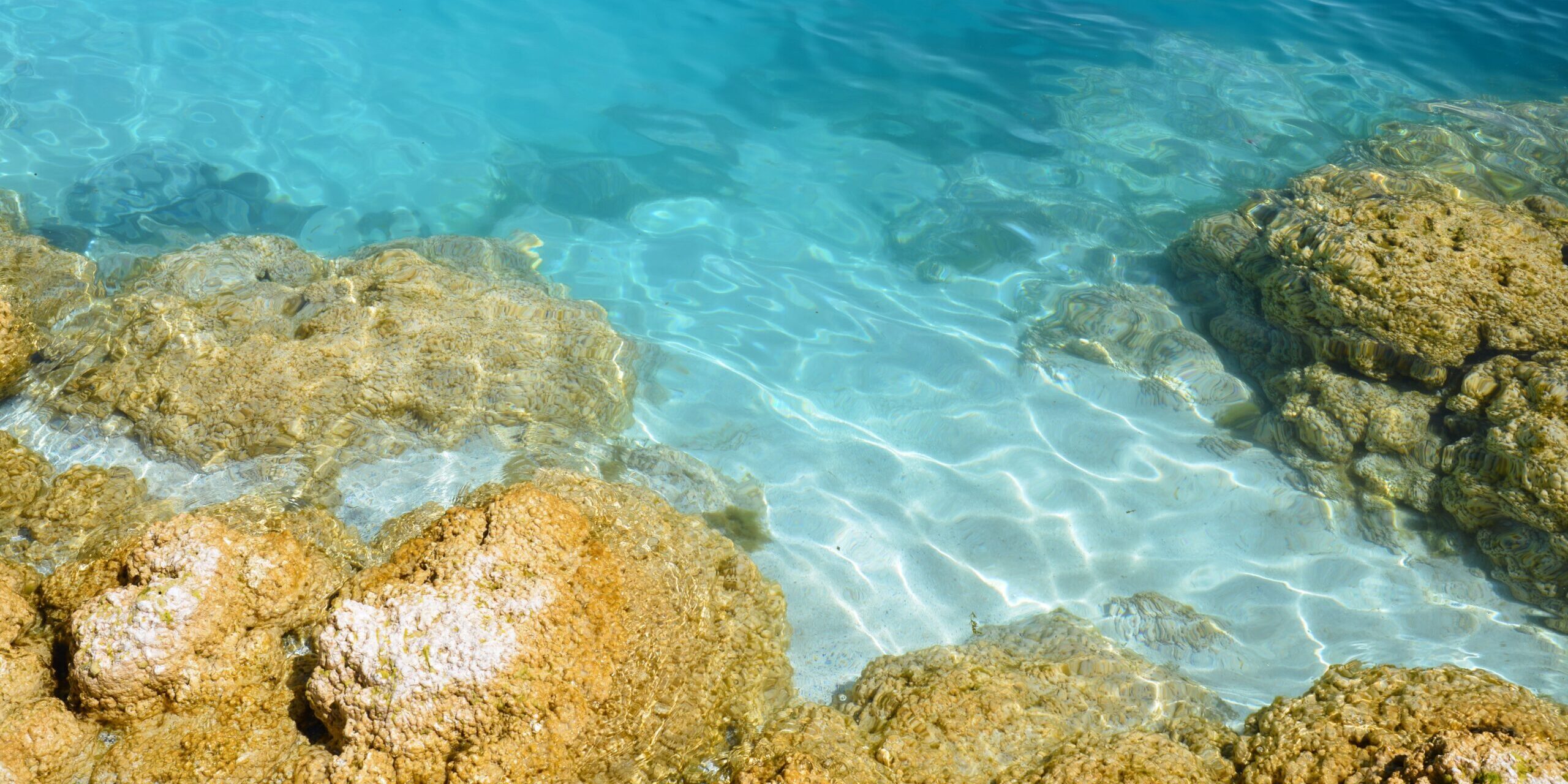
Spatially and temporally high-resolution paleoclimate data form the basis for validating and optimizing numerical climate models. Such data are a prerequisite for reliable forecasts of future climate development, especially the frequency and intensity of extreme weather events. Since instrumental measurements are lacking, former environmental parameters are reconstructed from proxy data, which are chemical, physical, and biological representative data stored in various climate archives such as lake sediments, cave speleothems, and mollusk shells.
These archives are precisely dated, and time series of proxy data are determined to reconstruct annual and seasonal climate parameters. In addition to already established proxies, new climate proxies are also being developed and validated in Mainz. The investigations focus on paleoweather, paleoenvironment, and paleoclimate of the Quaternary, especially the last 10,000 years, the period in which humans had a significant influence on climate development.
Work Groups
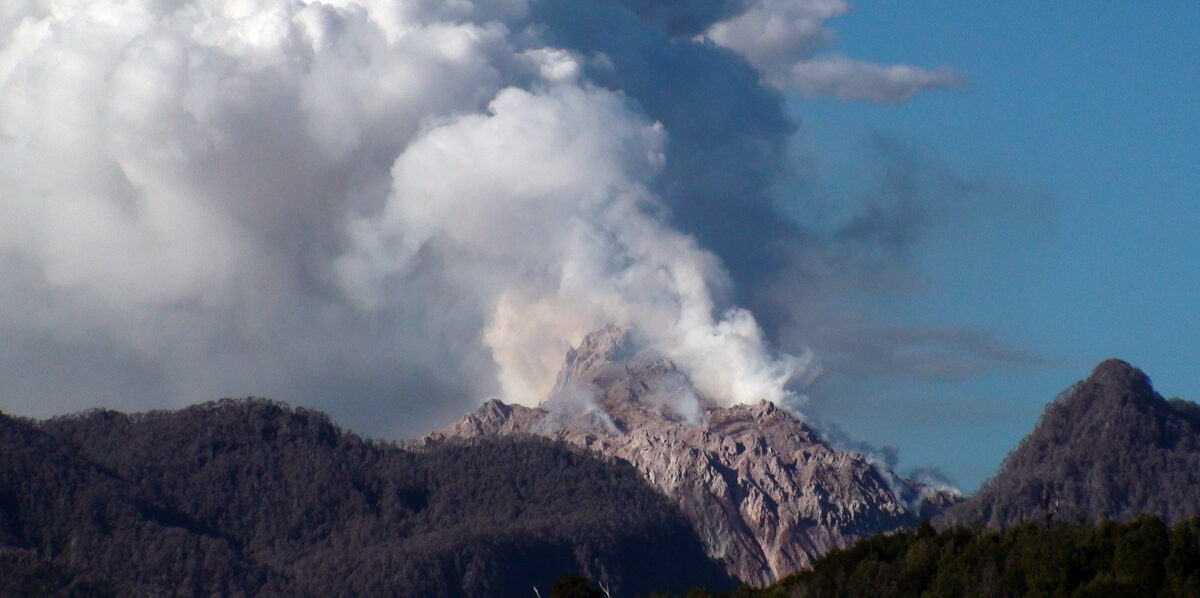
The Earth, with its various spheres, is a planet in constant motion. Collisions of lithospheric plates create mountain ranges or subduct oceans, accompanied by volcanic, magmatic, and tectonic activity, as well as rock metamorphism and earthquakes. We are interested in a better quantitative understanding of these complex geological processes.
This requires interdisciplinary collaboration consisting of geological fieldwork, laboratory experiments, geochemical analyses, and computer models. Central research questions include how magmas form, are transported to the Earth’s surface, and interact with the atmosphere as volcanic eruptions.
Work Groups
Managing Director
Deputy Head
Administrative Head
Sediment Geochemistry Work Group Office
EarthCriSys Office
Geophysics, Speleothem Research, Biomineralization Work Groups Office
Volcanology Work Group Office
Petrology, Metamorphic Processes, Geomaterial & Gemstone Research Work Groups Office
Paleontology, Volcano Seismology, Hydrogeochemistry, Climate & Sediments Work Groups Office
GFL/VL Office, High-Resolution Sedimentology Work Group, Institute Budget, business travel expense report, Field Trips, Student Assistants
Precision Mechanical Workshop
Course Manager & Examination Manager
Academic Advisor & Studies Manager
Study Manager
Institute Board:
Group 1
Botcharnikov, Castro, Jantschke, Kaus, Moulas, Passchier, Pogge von Strandmann, Scholz, Schöne, Sirocko, Toy, Reiss
Group 2
Brönhorst, Hofmann, Schwarz
Group 3
Häger, Helo, Tütken
Group 4
Berg, Scheer
Advisory Members:
Enzmann, Seelos, Demuth, Esper
Committee A3 (Learning and Teaching):
Group 1
Jonathan Castro (Deputy), Bernd Schöne (Chairperson), Philip Pogge von Strandmann, Virginia Toy
Group 2
Tim-Julian Albrecht, Paul Brönhorst, Florian Dinkel, Christoph Krömker
Group 3
Christoph Helo, Christian Liedgens, Klemens Seelos, Thomas Tütken
Advisory Members
Geosciences Student Advising Office (Demuth), Dean, Vice Deans, Bonn (Dean’s Office), Blasius (Head of Examination Office), Studies Manager/Capacity Officer (Seelos)
Committee B (Finance):
GFL
Philip Pogge von Strandmann
Group 3
Anton Popov
Group 4
Tanja Eich
Examination Committee (MSc and BSc Geosciences):
Group 1
Roman Botcharnikov, Evangelos Mouglas, Denis Scholz, Bernd Schöne (Chairperson)
Group 2
Leidens
Group 3
Christoph Helo, Klemens Seelos, Thomas Tütken
Group 4
vacant
BSc Geosciences Course Management:
Univ.-Prof. Dr. Denis Scholz
MSc Geosciences Course Management:
Univ.-Prof. Dr. Bernd Schöne
Studies Manager:
Dr. Klemens Seelos
Gutenberg Academy:
Univ.-Prof. Dr. Evangelos Moulas, Jun.-Prof. Dr. Anne Jantschke
Pre-selection Committee for the German National Academic Foundation: Univ.-Prof. Dr. Denis Scholz
Equality Commissioner of Faculty 09: Jun.-Prof. Dr. Anne Jantschke
Building Commissioner of Faculty 09: Dr. Stephan Buhre, Dr. Christoph Helo
Representative for the SOCRATES Program / Erasmus+: Dr. Anton Popov
BAföG Representative of Faculty 09: Dr. Klemens Seelos, Univ.-Prof. Dr. Boris Kaus
Ethics Commission: Univ.-Prof. Dr. Boris Kaus
Lectures by external guests and institute members
Tuesday 4:15-5:15 PM
Geo-Library, Room 00 462
Organization:
Jun.-Prof. Dr. Anne Jantschke &
Prof. Dr. Evangelos Moulas
The institute seminar is open to all students and work groups in Geosciences. Its goal is to make the latest results of geoscience research accessible to a general audience.
All events are offered in person and online via Teams (link upon request).
| Day | Speaker | Title | Institution |
|---|---|---|---|
| April 28 | Jan Knacksterdt | Traceability, Sustainability & Responsible Sourcing – Insights and opportunities in the industry from a geological perspective | Susonity Commercial GmbH |
| May 05 | Cancelled!!! | no seminar due to EGU conference | |
| May 12 | Dr. Joachim Krause | SEM-Based Automated Mineralogy: Fundamentals and Applications in Geosciences | Helmholtz Institute Freiberg for Resource Technology |
| May 19 | Prof. Dr. Boris Kaus | tba (Lecture location: Institute of Physics) | Johannes Gutenberg University Mainz |
| May 26 | Prof. Dr. Timm John | tba | FU Berlin |
| June 02 | Mr. Filippo Zarabara | New insights in slab-, lower-mantle interactions and intraplate volcanism from numerical models | University of Frankfurt |
| June 09 | Prof. Dr. Martin Grosjean | tba | University of Bern |
| June 16 | Prof. Dr. David de Vleeschouwer | Harmonizing Late Devonian Cyclostratigraphy Across Europe, North America, and China | University of Münster |
| June 23 | Prof. Dr. Wolfgang Müller | Why go shorter – Principles and Applications of 157 nm laser ablation ICP-MS/MS | University of Frankfurt |
| June 30 | Prof Dr. Gabriel Uhlein | tba | UFMG, Brazil |
| July 07 | Dr. Etienne Le Glas | Chlorine isotopes in volcanic gases, a new tracer of gas-water interactions | Johannes Gutenberg University Mainz |
| July 14 | Dr. Giulia Mingardi | Quartz phase transitions: their impact on rock rheology at lower crustal conditions | University of Heidelberg |
History of the Institute of Geosciences
In the winter semester 1946/47, Horst Falke (from Gießen) was commissioned to establish the Geological-Paleontological Institute at the newly re-founded University of Mainz. Falke gave his first lectures and practice classes in geology and paleontology without an appropriate geological-paleontological collection, books, or even geological maps; even chalk and sponges were scarce, and the lecture halls for the sometimes over 100 students were unheated. The Rotliegend deposits in the Saar-Nahe region, in particular, became a focus of Mainz research.
In 1951, Falke became a full professor and director of the Geological-Paleontological Institute. In the same year, the institute was commissioned by the Rhineland-Palatinate state government to establish a State Geological Survey for Rhineland-Palatinate.
With the appointment of assistant positions, teaching and research experienced a significant expansion, such as tectonics by Bruno Engels and geophysics by Otto Rosenbach in 1950, applied geology by Fritz Kutscher in 1952, and sediment petrography by Dieter Heim in 1956. In 1968, the institute moved from the former barracks buildings to the new natural sciences building, a move that had been planned since 1954. From 1970, Volker Lorenz expanded teaching and research to include volcanology. After Falke’s retirement in 1975, Alfred Kröner took over the institute’s leadership in 1977. With him, the institute’s research interests expanded to the Paleozoic of Gondwana.
Paleontology. In 1956, a paleontological department with its own chair was established at the Geological Institute. The vertebrate paleontologist Heinz Tobien was appointed to this chair. He worked primarily on the Tertiary period and conducted excavations and field trips not only in Höwenegg but also initiated those to Southern Europe and as far as Iran. Tobien was supported in building the department by Karlheinz Rothausen, Dietrich Berg, and Jürgen Boy, who also introduced the areas of work of the Mainz Basin and the Saar-Nahe region. As early as 1969, close collaboration in research and teaching took place with the Geological Survey of Rhineland-Palatinate and the Senckenberg Research Institute. In July 1967, the paleontological department became the Paleontological Institute, whose chair, after Heinz Tobien’s retirement (1978), was taken over by Norbert Schmidt-Kittler until his retirement in 2004.
Mineralogy. In May 1946, Ernst Baier gave his first lectures at the Institute of Mineralogy and Petrography. A first mineral collection could only be acquired in 1948. The first crystal models were made in the simplest way from chair legs. In 1951, Hans Hentschel gave his first petrography lecture and the first microscopy courses, which at that time had to make do with only three polarizing microscopes. In 1957, Adolf Helke took over ore deposit studies; the still very extensive collection of deposits from all over the world bears witness to this. The Institute for Gemstone Research in Idar-Oberstein, founded in spring 1948 and supported by the Birkenfeld district until 1961, was affiliated with Johannes Gutenberg University Mainz as an external institute based in Idar-Oberstein in the summer semester of 1955, with the approval of the Ministry of Education and Culture of Rhineland-Palatinate. The head of the institute was Karl Schlossmacher. The Department of Gemstone Research was led by Jürgen Pense from 1967. In 1967, Hilmar von Platen took over the institute’s leadership, and in 1990 he also took over the leadership of the Department of Gemstone Research.
In 1977, all three institutes were merged to form the Institute of Geosciences with three teaching units (Geology, Paleontology, Mineralogy). In 2005, a restructuring into work groups took place. At the same time, the Institute of Geosciences merged with Chemistry, Pharmaceutical Sciences, and Geography in Faculty 09.
Other teaching staff in Geology included Karl Geib, Herrmann Bank, Gerhard Dreyer, Karl Stapf, Manfred Fürst, Jörg Negendank, Dietmar Schenk, Wolfgang Jacoby, and Stefan Dürr; in Mineralogy, Helmut Höller, Ingo Keesmann, Heiner Tobschall, Ekkehart Tillmanns, Lukas Baumgartner, Reinhardt Trettin, and Horst Böhm.
Sources: Interviews with contemporary witnesses, course catalogs from Winter Semester 1946/47, and Krafft, F. (1977, Ed.).
Mathematics and Natural Sciences at Johannes Gutenberg University Mainz.
Overview of the faculties on the occasion of the university’s 500th anniversary. Steiner, Wiesbaden, 149 pp.
Geosciences Departmental Library
The library of the Institute of Geosciences is part of the departmental library Georg Forster Building.
The Institute of Geosciences still holds, as a remaining stock of the former Geosciences departmental library, final theses (diploma theses, diploma mapping, doctoral theses, and habilitations) as well as the map collection (geological and topographical maps). These can be viewed on site upon request to the library representative (Prof. Dr. Thomas Tütken). An overview of the maps and final theses inventoried to date (up to 2002) can be provided upon request:
Doctoral theses; Habilitations
Diploma theses; Diploma mapping
Topographical maps; Geological maps
Information on books, journals, and databases in Geosciences can be found in the Geosciences Subject Information of the JGU Library.
Online literature searches can be performed in the UB OPAC:
The Geoscientific Collections can be visited upon request
Mineralogical Exhibition Collection, 3rd floor NatFak Building, Room 03-228
Opening hours of the Mineralogical Exhibition Collection during the summer semester:
April: 04-22
May: 05-06, 05-20
June: 06-03, 06-17
July: 07-01, 07-15
on Wednesdays from 2 PM to 4 PM
Additional display cases featuring fossils and minerals can be viewed at any time during the institute building’s opening hours in the ground floor foyer.
Contact:
The collections at the Institute of Geosciences
The Institute of Geosciences houses several collections in the fields of Mineralogy, Paleontology, and Geology, which are used extensively for research and teaching purposes. Following its founding as the Institute of Geology and Paleontology in the winter semester of 1946/47, many objects were added to the collection through field trips or recovered during the institute’s excavations both domestically and abroad. The first mineral collection was acquired in 1948. The founders of the collections included Prof. Dr. Horst Falke, Prof. Dr. Heinz Tobien, and Prof. Dr. Adolf Helke.
The collections thus represent the (historical) research areas of the Institute of Geosciences and document evidence of regional and global research work spanning nearly 80 years, including the documentation of fossil excavations at home and abroad or of global mineral deposits.
The individual collections consist of more than 50,000 objects in total, including rocks, minerals, pearls, ivory, models, fossils, bones, alcohol specimens, and fossil casts, and are managed by the work groups. The collections house objects dating from 600 million years ago to the present day. Microfossils only a few micrometers in size are displayed alongside rock slabs with a diameter of more than 1 m within the collections.
The Mineralogical Exhibition Collection contains approximately 1,200 particularly beautiful mineral specimens from all over the world. They are displayed in 15 glass cases for teaching purposes and can be viewed upon request. Naturally, the entire collections are available for research inquiries from both domestic and international sources.
Upon receiving his offer of appointment to JGU in 1956, Adolf Helke continued his already established mineral deposit collection. It documents his worldwide research travels and scientific activities with rocks, minerals, and especially ores from global deposits.
The collections are constantly growing in size through excavations, field collections, and targeted purchases. The value of objects from sites that are no longer accessible today is increasing for research. In contrast, material from completed research projects primarily has value for the history of science or documentation and is also frequently used for teaching purposes.
As even more sites will be exploited or become inaccessible in the future, material from these locations serves as important reference material for research and teaching. Furthermore, new research methods can benefit from historical material.
The following major sub-sections of the Geoscientific Collections of JGU can be distinguished:
• General Mineralogy Collection
• Mineralogical Exhibition Collection
• Gemstone Collection
• Pearl Collection
• Ivory Collection
• Crystal Model Collection
• Helke Mineral Deposit Collection
• Petrographic Collection
• Historical Geology Facies Collection
• Osteology Collection
• Mainz Basin Collection
• Sclerochronology Collection
• Paleozoic and Tertiary Fish Collection
• Paleozoic Brachiopod Collection
• Cephalopod Collection
• Fossil Bivalve and Gastropod Collection
• Fossil Arthropod Collection
• Fossil Echinoderm Collection
• Fossil Coral Collection
• Fossil Plants
• Nattheim Collection
• Pleistocene Rhine Gravel Fossil Collection
• Tertiary Vertebrate Collection
Further information on the history of the:
The use of geothermal energy offers the chance for a constantly available, decentralized, climate-friendly heat supply for buildings or the provision of process heat for trade and industry. The supply of thermal energy from the Earth’s interior is almost inexhaustible. To enable the sustainable and cost-effective use of this energy source, igem researches the processes occurring underground during the utilization of geothermal reservoirs. The goal is to develop methods for improved assessment of site conditions prior to the development of geothermal energy sources.
The focus of igem’s work is the acquisition and evaluation of geothermal resources, as well as support in the exploration of geothermal reservoirs. In the course of this work, igem employees are involved in both the creation of geological models and the determination of geothermally relevant rock properties. The recording of natural seismicity and the development of methods for assessing and evaluating the hazard of anthropogenically induced seismic signals in connection with the operation of geothermal plants is another component of igem’s activities.
Additionally, there is many years of experience in the application and development of numerical methods for simulating induced seismicity, including coupled hydraulic-mechanical models.
Press Releases Institute of Geosciences (since 2005)
2026
What crystals reveal about volcanoes (tagesschau 2026-03-19)
New Electron Beam Microprobe Laboratory inaugurated at JGU (JGU 2026-03-18)
Neanderthal prey: Giant elephants migrated hundreds of kilometers through Ice Age Europe (JGU 2026-03-16)
Hygienic conditions in Pompeii’s early baths were poor (JGU 2026-01-12)
2025
Energy from the deep: Collaborative project researches temperature-related rock changes in geothermal reservoirs (JGU, 2025-10-10)
Dinosaur teeth as a climate time capsule – New method reconstructs carbon dioxide content and photosynthetic performance from fossil tooth enamel (JGU, 2025-08-05)
The water management of ancient Arles (JGU, 2025-06-28)
Unknown microorganisms used marble and limestone as habitat (JGU, 2025-02-27)
New guide for climate research: Timescales for the eruption of the Laacher See volcano synchronized (JGU, 2025-01-16)
Herbivores or carnivores: New tools for researching extinct reptiles (JGU, 2025-01-08)
2024
From climate to human development: Eifel maars provide a unique geoarchive for all of Central Europe (JGU, 2024-10-10)
Temperature record in the Southwest Pacific: Fiji corals show highest water temperature in over 600 years (JGU, 2024-08-14)
Volkswagen Foundation funds junior professorship in Earth System Sciences (JGU, 2024-07-16)
Carbonate layers open a view into Roman times (JGU, 2024-06-13)
On the trail of the secret of gemstones (JGU, 2024-02-15)
From the Mediterranean to the Atlantic: Gibraltar Arc migrates westward (JGU, 2024-02-13)
2023
German Engineering Award for Innovation & Digitalization for MABEIS Project (BSVI, 2023-09-29)
Regular cleaning secured water supply via Roman aqueduct of Divona (JGU, 2023-08-04)
Accelerated weathering: A way out of the climate dilemma? (JGU, 2023-07-31)
Plate tectonic processes in the Pacific and Atlantic during the Cretaceous still shape the Caribbean today (JGU, 2023-02-11)
2022
Wear marks on dinosaur teeth provide clues about diet (JGU, 2022-12-13)
Large mammals disappear from the Eifel region 11,000 years ago (JGU, 2022-12-08)
Hominids cooked fish as early as 780,000 years ago (JGU, 2022-11-15)
Volcano Cumbre Vieja erupted very fluidly (JGU. 2022-06-08)
2021
How quickly does the climate recover? (JGU, 2021-10-19)
Heavy rain forecast from the Eifel maars (MPI/JGU, 2021-08-20)
Long-term climate regulation has changed with the spread of marine animals and land plants (JGU, 2021-07-14)
The City of David and the sharks’ teeth mystery (Eureka, 2021-07-03)
The Aqueduct of Constantinople: How the longest ancient water channel was maintained (JGU, 2021-05-06)
Material loss during the production of marble slabs in the Roman Imperial period was possibly lower than today (JGU, 2021-04-24)
Tons of rock blocked Europe’s busiest freight train route near the Loreley rock (Sdt Zeitung, 2021-03-26)
2020
Global precipitation changes expected as a result of climate change (JGU, 2020-12-10)
The hydraulics of the world’s first industrial plant: Unique construction of the Barbegal watermills (JGU, 2020-10-21)
Ingested mineral dust leaves characteristic wear marks on teeth (JGU, 2020-08-25)
Zinc isotopy in tooth enamel: New method for reconstructing the diet of fossil vertebrates (JGU, 2020-02-19)
2019
The primordial state of the oceans is being researched with ERC funding (JGU, 2019-10-16)
Sediment melts in the Earth’s mantle identified as a source of saline inclusions in diamonds (JGU, 2019-06-14)
Wear marks on the teeth of scaled lizards provide clues about their diet (JGU, 2019-06-14)
Phytolith and water content of fodder plants influence tooth enamel abrasion in vertebrates (JGU, 2019-01-04)
2018
Intensive fish trade between Egypt and Israel as early as 3500 years ago (JGU, 2018-09-27)
Mineral finds on the Galapagos Islands raise questions about origin and formation (JGU, 2018-09-18)
Industrial complex in the Roman Empire: Watermills of Barbegal likely produced flour for ship’s biscuits (JGU, 2018-09-07)
Cut and thrust proof: How Neanderthals hunted 120,000 years ago (JGU, 2018-06-25)
Boris Kaus receives ERC Consolidator Grant for research into magmatic processes (JGU, 2018-02-21)
2017
Computer simulations from Geosciences clarify mystery of vortex structures in multilayer metals (JGU, 2017-11-27)
Donald Dingwell receives GRC Fellowship (JGU, 2017-05-22)
Cornelis Passchier receives Stephan Mueller Medal 2017 from the EGU (JGU, 2017-04-26)
Stalagmites provide paleoclimate data (JGU, 2017-02-02)
2016
Laccoliths can also form during a volcanic eruption (JGU, 2016-11-23)
Stalagmites provide paleoclimate data (JGU, 2016-10-01)
Calcite deposits in Patara aqueduct: Insights into climate during Nero’s time (JGU, 2016-07-29)
Feodor Lynen Research Scholarship for Thomas Tütken (JGU, 2016-07-06)
ERC Proof of Concept Grant for Boris Kaus (JGU, 2016-05-10)
ERC Consolidator Grant ‘Vertebrate Herbivory’ for Thomas Tütken (JGU, 2016-02-10)
EU funding for doctoral positions in geophysics (JGU, 2016-02-02)
2015
Blueschists are not evidence for the beginning of plate tectonics (JGU, 2015-12-14)
Denis Scholz receives Heisenberg Professorship from the DFG (JGU, 2015-11-05)
Dinosaur–body temperature: chemical thermometer in eggshells (JGU, 2015-10-14)
Easter Bunny Amethyst from university collections in Bremen exhibition (JGU, 2015-06-29)
2014
2013
Earth’s crust in the Archean was unstable and dripped into the Earth’s mantle (JGU, 2013-12-18)
Model calculations on the dynamics of the Greenland ice must be expanded (JGU, 2013-08-28)
Paleontological University Collection: Mollusks tell of the climate (JGU, 2013-02-04)
2012
International research team confirms influence of the sun’s 11-year cycle on the climate of certain regions (JGU, 2012-08-25)
Mineralogical University Collection: Minerals do not die (JGU, 2012-06-26)
2011
JGU competes in all three funding lines of the federal and state Excellence Initiative (JGU, 2011-09-01)
Latest technology for excellent research at the Geocycles Research Center of the University of Mainz (JGU, 2011-04-13)
2010
Mainz geoscientists involved in research drilling on the North Sea peninsula Eiderstedt (JGU, 2010-08-17)
Nebra Sky Disk sacrificed after volcanic eruption (JGU, 2010-08-10)
2009
2008
Rejuvenation and erosion in cratons researched: The ancient continental cores do change (2008-07-25)
Mussels – unique climate archive on the seabed (JGU, 2008-06-25)
2007
2006
State Order of Merit for Geologist Alfred Kröner (2006-02-14)
Literature List Institute of Geosciences

2026
2025
2024
2023
2022
2021
2020
2019
2018
2017
2016
2015
2014
2013
2012
2011
2010
2009
2008
2007
2006
2005
2004
2003
2002
2001
2000
1999
1998
1997
1996
1995
1994
1993
1992
1991
1990
1989
1988
1987
1986
1985
1984
1983
1982
1981
Not dated
Managing Director
Office
Central Office
For institute-related matters
Student Advising Office
Questions about study plan design
Examination Office
Questions about registration periods and courses
Student Council
How can we, as students, represent our interests?
The student council represents the interests of students in a faculty, organises events, and offers support with academic and study-related questions.
Studying at JGU
What application process do I need? How can I re-register for the semester?
Student Services is your first contact point for advising you on general questions relating to applications and the program of study at Johannes Gutenberg University Mainz (JGU). Please visit the program of study portal for further information during service hours.
Student Advisory Center (ZSB)
Questions about your program of study?
Many questions can come up as you pursue your degree. The Student Advisory Center (ZSB) is the first point of contact at JGU for all questions relating to studying. All information on service hours and advisory services can be found on the ZSB website in the Portal Studium.
Studying at JGU
Will I receive a fellowship? How can I finance my program of study?
On the Studying at JGU portal, you can find information on funding options for your studies and the various scholarship options, including a Deutschlandstipendium, a scholarship for gifted students, target group-oriented or earmarked scholarships.

